May 6, 2026
The Twin Flames: Flame 2 — Drink My Blood
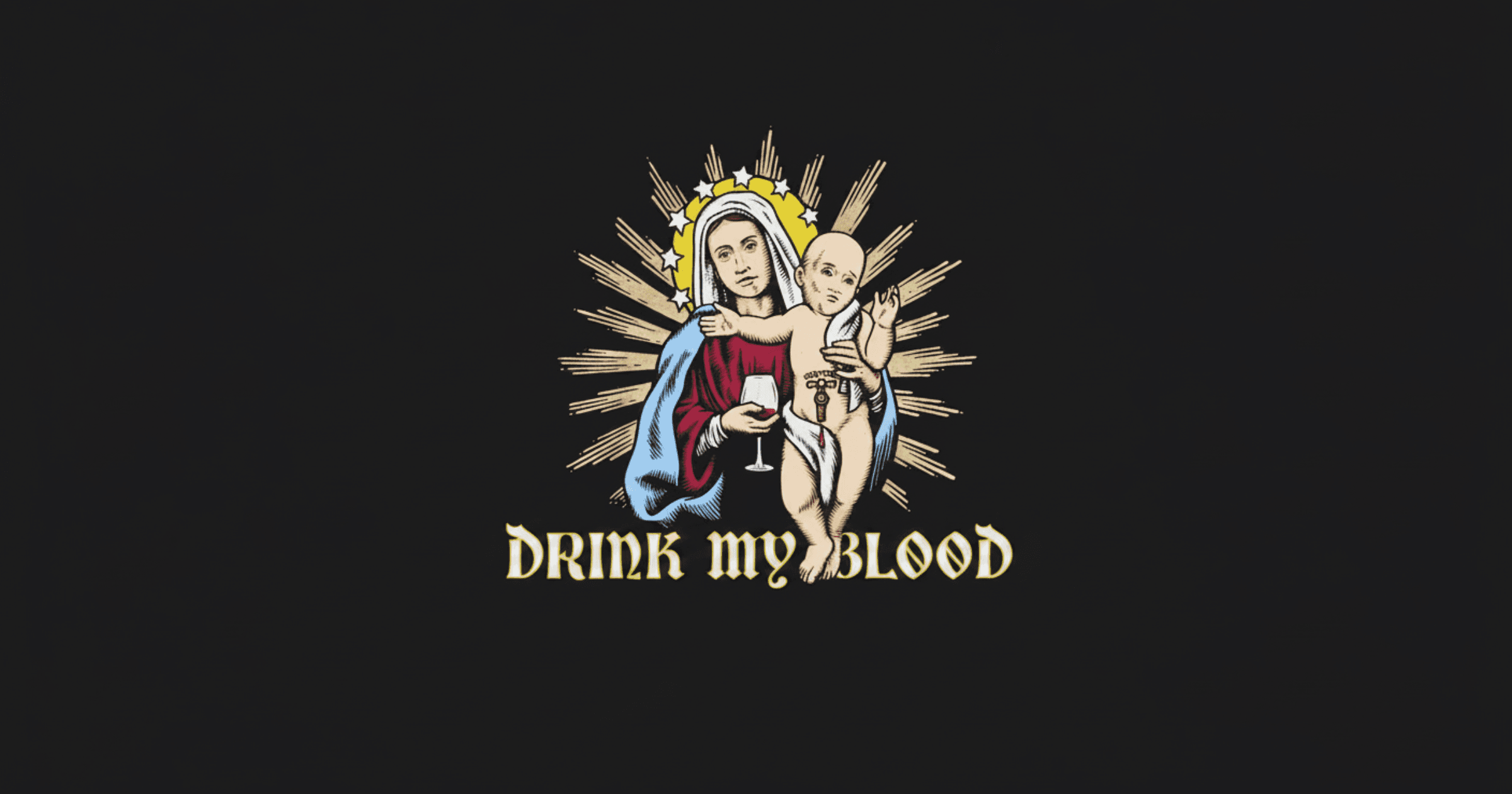
Drink My Blood
26 And as they were eating, Jesus took bread, and blessed it, and broke it, and gave it to the disciples, and said, "Take, eat; this is my body."
27 And he took the cup, and gave thanks, and gave it to them, saying, "Drink ye all of it;
28 For this is my blood of the new testament, which is shed for many for the remission of sins." — Matthew 26:26–28
This is the ritual at the center of Christianity. Two billion people perform it every week. They call it communion. They call it the Eucharist. They call it the Lord's Supper. But strip away the ceremony and read what is actually being commanded: eat my flesh and drink my blood.
Now recall what the Torah says — not once, but repeatedly, with absolute clarity:
Only you shall not eat the blood; you shall pour it upon the earth as water. — Deuteronomy 12:16
23 Only be sure that you eat not the blood: for the blood is the life; and you may not eat the life with the flesh.
24 You shall not eat it; you shall pour it upon the earth as water. — Deuteronomy 12:23–24
But flesh with the life thereof, which is the blood thereof, shall you not eat. — Genesis 9:4
AO forbids the consumption of blood. It is one of the oldest commandments in Scripture — given to Noah, long before Sinai, long before Israel even existed. Blood must be poured on the ground. Always. No exceptions. The blood is the life, and the life belongs to AO — not to man.
And yet here stands JC at his final meal, holding up a cup and telling his followers: drink this — it is my blood. Whether literal or symbolic, the analogy itself is an abomination. Of all the images available to a man who claims to be sent by the God of Israel — he chose the one thing that God expressly, repeatedly, and universally forbids.
He demands that you drink it in remembrance of a child sacrifice — a thought which would never enter into the heart of the Most High God:
And they have built the high places of Tophet, which is in the valley of the son of Hinnom, to burn their sons and their daughters in the fire; which I commanded not, neither came it into my heart. — Jeremiah 7:31
The same chapter. The same God. Verse 22: I did not command burnt offerings or sacrifices. Verse 31: the thought of sacrificing children never even entered My heart. And yet the centerpiece of Christianity is a Father who sacrifices His own Son — and commands you to drink the blood in remembrance.
And consider what we just established in Part 1. AO never commanded blood sacrifice (Jeremiah 7:22). He never wanted blood on altars. The entire sacrificial system was inserted by a false priesthood to make the Most High look like Baal. The first flame turned AO into a blood-demanding god. And now, at the climax of that deception, the second flame arrives and says: not only does God demand blood — He demands that you drink it.
How much more misplaced could this analogy be? A man claiming to represent the God who forbids blood consumption, telling Israel to consume blood as the highest act of worship. The priests of Baal cut themselves and poured blood on altars. Christianity pours blood into cups and calls it salvation.
The Lamb Without Blemish
That cup leads to a cross, and the cross leads to a theology:
Behold, the lamb of God, which takes away the sin of the world. — John 1:29
For even Christ, our Passover, is sacrificed for us. — 1 Corinthians 5:7
But with the precious blood of Christ, as of a lamb without blemish and without spot. — 1 Peter 1:19
This is the second flame. A man from the tribe of Judah — treacherous Judah (Jeremiah 3:11) — is presented as the ultimate sacrifice, the lamb without blemish, the final blood offering to end all blood offerings. His death supposedly satisfies the blood requirement that the first flame installed.
But here is where the deception collapses under the weight of its own claims. Because if it worked — if this sacrifice accomplished what they say it accomplished — then the evidence should be undeniable.
If He Took Away Sin, Where Did It Go?
JC is called the lamb who takes away the sin of the world. Not reduces it. Not manages it. Takes it away.
Look outside.
Is the sin of the world taken away? Is there a single nation on earth walking in righteousness? A single city without corruption? A single generation since that supposed sacrifice that has not been drowning in wickedness, violence, and every abomination under the sun?
Two thousand years have passed — allegedly. The sin is not taken away. It has multiplied. If anything, the world has become more wicked since this man was presented as the solution — not less.
If a doctor tells you he has the cure, and two thousand years later the patient is sicker than ever, the cure did not work. And a cure that does not work is not a cure — it is a distraction from finding the real one.
If He Freed the Captives, Why Are They Still in Chains?
In Luke chapter 4, JC stands up in the synagogue, opens the scroll to Isaiah 61, and reads:
The Spirit of AO is upon me, because He has anointed me to preach the gospel to the poor; He has sent me to heal the brokenhearted, to preach deliverance to the captives, and recovering of sight to the blind, to set at liberty them that are bruised. — Luke 4:18
He then closes the scroll and declares: This day is this scripture fulfilled in your ears (Luke 4:21).
Fulfilled? He proclaimed liberty to the captives — and sixteen hundred years later, by their own timeline, the worst captivity in history began. The thirty-five hundred year Babylonian exile continued. The children of Israel were scattered to the four corners of the earth. They were carried away in ships (Deuteronomy 28:68) into the most brutal captivity the world has ever seen — a four-hundred-year affliction that makes Egypt look merciful.
If he set the captives free, why are they sitting in captivity right now?
Isaiah 61 is not fulfilled. It cannot be fulfilled until the Messiah actually delivers the children of Israel from the nations — just as Moses delivered them from Egypt. That is the second Exodus, and it has not happened yet.
The Torah Is Life — Paul Calls It Death
Here is where the second flame reveals its true purpose. It is not merely about a sacrifice. It is about replacing the Torah.
The Torah declares itself a tree of life:
She is a tree of life to them that lay hold upon her, and happy is every one that retains her. — Proverbs 3:18
15 See, I have set before you this day life and good, and death and evil;
16 In that I command you this day to love AO your God, to walk in His ways, and to keep His commandments and His statutes and His judgments, that you may live and multiply. — Deuteronomy 30:15–16
The Torah is life. The commandments are life. Keeping them is how Israel lives and multiplies and receives the blessings of the Most High. AO Himself says so.
Now listen to Paul:
10 And the commandment, which was ordained to life, I found to be unto death.
11 For sin, taking occasion by the commandment, deceived me, and by it slew me. — Romans 7:10–11
Paul takes the commandment — which AO ordained to life — and declares that he personally found it to be unto death. He goes further:
18 For I know that in me (that is, in my flesh) dwelleth no good thing: for to will is present with me; but how to perform that which is good I find not.
19 For the good that I would I do not: but the evil which I would not, that I do. — Romans 7:18–19
Read that confession carefully. Paul is telling you plainly: I cannot stop sinning. The law shows me what is good, but I cannot do it. The evil I don't want to do — I do it anyway. This is the man whose writings form the foundation of Christian theology. A self-confessed slave to sin who blames the commandment for his bondage.
Now go back to the very beginning. The first murder in history. Cain is angry because his offering was not accepted, and AO speaks to him directly:
If you do what is right, will you not be accepted? But if you refuse to do what is right, sin is crouching at your door; it desires you but you must master it. — Genesis 4:7
AO told Cain — to his face — that sin can be mastered. You must master it. Not "you will be a helpless slave to sin." Not "the commandment will deceive you and slay you." The Most High God says: you must master sin. Paul says: I cannot. I do the evil I don't want to do. I am a wretched man.
One of them is lying. And it is not AO.
The sting of death is sin, Paul says, and the strength of sin is the law (1 Corinthians 15:56). He takes the tree of life and calls it the strength of sin. What AO gave with His own finger at Sinai, Paul says was given only to condemn. The Pauline doctrine is the exact opposite of what Samuel declared: to obey is better than sacrifice (1 Samuel 15:22). Paul flips it on its head — sacrifice is better than obedience. One sacrifice covers everything. You are under grace, not law.
And look at the fruit. Look at what happens when you tell two billion people they are "covered in the blood of Christ" and the law no longer applies to them. They eat whatever they want — pork, shrimp, every unclean thing AO forbade. They work whenever they want — the Sabbath is just another day. They worship whatever they want — Christmas trees, Easter eggs, Sunday services, all of it borrowed from the very paganism the Torah commands Israel to flee from. They bow to images. They pray to saints. They do every abomination the nations do and call it freedom in Christ.
The Psalmist saw this spirit thousands of years before it had a name:
Let us break their bands asunder, and cast away their cords from us. — Psalms 2:3
Their bands. Their cords. Whose? AO's. The commandments. The Torah. That is the rallying cry of the Pauline doctrine — let us cast off the yoke of the law! And that is exactly what two billion Christians have done.
This is not a theological disagreement. This is a direct contradiction of the Most High God. And Isaiah already told you what to do with it:
To the law and to the testimony: if they speak not according to this word, it is because there is no light in them. — Isaiah 8:20
Paul does not speak according to the law. There is no light in him.
Edom's Masterpiece
Make no mistake about what the New Testament is. It is not a sequel to the Torah. It is a weapon against it.
The fourth beast — America, Edom — understood something that every enemy of Israel has understood since the days of Balaam: you cannot curse what AO has blessed. Balak hired Balaam to curse Israel, and Balaam could not do it (Numbers 23:8). No sorcery, no enchantment, no army can destroy the children of Israel as long as they walk in the ways of the Most High.
So what did Balaam advise? If you cannot curse them — get them to curse themselves. Get them to forsake the Torah. Get them to commit whoredom with the daughters of Moab and bow to their gods (Numbers 25:1–3, Numbers 31:16). That is the only strategy that has ever worked against Israel.
And that is exactly what the New Testament does. It does not attack Israel from the outside. It invites Israel to abandon the Torah from the inside — willingly, joyfully, believing they are being set free, when in reality they are walking into the only trap that can destroy them.
The New Testament is Edom's masterpiece. A document so brilliantly crafted that it convinces the children of Israel to throw away the tree of life with their own hands — and thank their captors for the privilege.
The Scepter and the Lawgiver
Genesis 49:10 is where you can see both flames operating in a single verse:
The scepter shall not depart from Judah, nor a lawgiver from between his feet, until Shiloh come. — Genesis 49:10 (corrupted)
The world reads this and concludes: the kingship belongs to Judah. The Messiah comes from Judah. And this is the framework both Judaism and Christianity have built their entire theology upon.
But ask one simple question: when Jacob speaks this blessing, who is actually in charge?
Joseph. Joseph rules Egypt. Joseph holds the scepter. Joseph's authority saves the entire family. And Joseph's line keeps that authority — because Moses comes from Ephraim, and Moses is both the lawgiver AND the priest. He gave the Torah. He stood between AO and Israel. He held the rod.
The scepter was never with Judah. The lawgiver never came from Judah.
The scepter will not depart from
JudahLeviJoseph nor a lawgiver from between his feet until Shiloh comes and the allegiance of nations is his. — Genesis 49:10 (corrected)
Moses is from Ephraim — lawgiver and priest. David is from Ephraim — king and priest. The throne and the priesthood were never separated. They belong to one tribe, one line, one promise.
And David's priesthood is not symbolic. It is not a metaphor. David wore the linen ephod (2 Samuel 6:14) — priestly garments that no one outside the priesthood may wear. David sacrificed burnt offerings and peace offerings before AO (2 Samuel 6:17, 1 Chronicles 16:2). David built an altar and offered sacrifices, and AO answered him by fire from heaven (1 Chronicles 21:26). Fire from heaven is not passive tolerance — it is divine validation.
And when Uzzah reached out to steady the ark, he was struck dead (2 Samuel 6:7). Yet David — wearing the ephod, dancing before the ark — was approved. The Torah does not bend. The Torah distinguishes. If David were a stranger to the priesthood, he would have died where Uzzah fell. He did not.
Deuteronomy 18 confirms this union. Verse 1 — Moses addresses the priesthood. Verse 15 — "AO your God will raise up unto you a Prophet from the midst of you, of your brethren, like unto me." Like unto Moses. From the same tribe. From among the brethren of the priesthood. The Messiah is a priest-king from Ephraim — the scepter and the lawgiver in one hand, exactly as it was from the beginning.
Now watch what the twin flames did. They took Joseph's blessing — the birthright, the throne, and the priesthood, all belonging to one house — and they split it in three. They kept the birthright with Joseph, gave the priesthood to Levi, and the throne to Judah. Three tribes where there should be one.
The reality: the birthright belongs to Joseph, the throne belongs to Joseph, and the priesthood belongs to Joseph. One house. One blessing. Never divided. But that artificial separation is not just a historical error. It is the mechanism that enables everything that follows.
The Priesthood Change That Proves the Fraud
Because once you separate the throne from the priesthood, Hebrews 7:11-12 becomes possible:
11 If therefore perfection were by the Levitical priesthood (for under it the people received the law), what further need was there that another priest should rise after the order of Melchizedek, and not be called after the order of Aaron?
12 For the priesthood being changed, there is made of necessity a change also of the law. — Hebrews 7:11–12
Read that carefully. The author of Hebrews is not hiding the ball. He is telling you plainly: we changed the priesthood, and therefore the law must change too. The argument only works because Levi holds the priesthood and JC comes from Judah — a "non-priestly" tribe. A priest from Judah represents a change. And a change of priesthood necessitates a change of law.
But if the priesthood was always Ephraim, and the Messiah is also Ephraim — there is no change. There was never a change. Hebrews 7's entire argument collapses the moment you restore the truth of Genesis 49:10.
But AO already declared through Jeremiah:
17 For thus says AO: David shall never lack a man to sit upon the throne of the house of Israel;
18 Neither shall the priests the Levites lack a man before me to offer burnt offerings, and to kindle meat offerings, and to do sacrifice continually. — Jeremiah 33:17–18
The throne is eternal. The priesthood is eternal. AO said so. And AO does not change (Malachi 3:6). And AO is not a man that He should lie (Numbers 23:19).
The author of Hebrews says the priesthood changed. But if AO declared it eternal, then it did not change. If Hebrews says otherwise, Hebrews is wrong. It is that simple.
The only resolution is the one the Torah already provides: the true priesthood belongs to Ephraim, the Levitical priesthood was inserted, and the law of AO stands forever exactly as He gave it.
Two Religions, One Foundation
And here is where most people miss the full scope of the deception. Christianity did not build the second flame alone. It built it on top of a foundation that modern Judaism refuses to question.
Modern Judaism does not reject the Second Temple. It does not dispute the Cyrus narrative or the seventy years. It does not challenge the existence of JC — it simply says he was not the Messiah. It accepts Leviticus as the word of God. It accepts the Levitical priesthood as legitimate. It does not dispute Saturday being the Sabbath — a day determined by the Gregorian calendar of the fourth beast, not by the 364-day calendar of the Most High. And critically, it insists that the throne and the priesthood are separated — that David is from the tribe of Judah, not from the tribe of the priesthood.
In other words, modern Judaism keeps the first flame burning. It validates every premise the second flame needs to ignite. The throne belongs to Judah? Judaism agrees. The priesthood belongs to Levi? Judaism agrees. The sacrificial system was commanded by AO? Judaism agrees. The only thing Judaism disputes is the candidate — not the framework.
Christianity and Judaism look like opponents. They have debated for two thousand years. But they are standing on the same stage, arguing over the same lie. One says JC fulfilled the sacrificial system. The other says the fulfillment hasn't come yet. Neither asks the question that destroys them both: what if AO never commanded the sacrificial system in the first place?
Neither religion leads Israel back to the truth — that the priesthood belongs to Ephraim, not Levi. That Leviticus was inserted. That the throne and the priesthood were never separated — the Messiah is both king and priest (Zechariah 6:13). That the promised land is here in America, not in a strip of land overseen by the very people who crafted this deception. That the Second Temple never existed, and the entire narrative of Cyrus, Ezra, and the return from Babylon was manufactured to make you believe the prophecies have already been fulfilled — so you stop looking for their true fulfillment.
This is not accidental. It is the Hegelian dialectic — thesis and antithesis, designed to produce a predetermined synthesis. Judaism provides the thesis: reject JC but accept everything else — the Second Temple, the tribe of Judah, the Saturday Sabbath, the seventy years. Christianity provides the antithesis: accept JC but abolish the Torah. Two opposing camps, both built on the same false foundation — that the priesthood belongs to Levi, that the throne belongs to Judah, and that the two were ever separated.
The endgame is not the victory of one over the other. The endgame is the destruction of every Abrahamic faith. To make you lose faith entirely — in everything.
But what the architects of this deception did not account for is the Torah itself. You can destroy confidence in religions but you cannot destroy the word of AO. And when both flames are extinguished, what remains is what was always there: the law, the testimony, the true priesthood of Ephraim, and the true Messiah.
Two Flames, One Strategy
The twin flames are two halves of one strategy — and the strategy is Balaam's.
The first flame is Levi — a tribe written into the Torah to install a sacrificial system that AO never commanded. It turned the Most High God into a deity who demands blood, indistinguishable from the gods of the nations.
The second flame is Judah — treacherous Judah — who offered a man as the ultimate blood sacrifice to satisfy a demand that never existed. And to seal the deception, the architects declared the Torah obsolete — the tree of life became the ministry of death, the commandments became a curse, and the children of Israel were told to stop keeping the very thing that AO says gives them life.
The lamb did not take away the sin of the world. The sin is still here — and Paul himself told you he could not stop doing it.
The captives were not set free. They are still in chains — and the chains got heavier after this "freedom" was proclaimed.
The law was not abolished. It is a tree of life, and AO does not change (Malachi 3:6). And AO told Cain four thousand years before Paul was born: you can master sin.
Balaam could not curse Israel. So he taught Balak to make Israel curse herself. The New Testament is that teaching, perfected — Edom's final answer to the Israel problem. Get them to forsake the Torah, and the Torah's Author will do the rest.
But AO does not forget His people. The true Messiah — King David, the light of Israel, the lamp that was extinguished and will be lit again — is coming to do what the second flame only pretended to do: deliver the children of Israel from the nations, restore the throne, rebuild the temple, restore the pure language, and turn the lampstand back on.
The evening vision is ending. The new day is at the door.
Tomorrow: 9-11 — arguably the occult's favorite number. But has anyone ever pondered why?
In that day will I raise up the tabernacle of David that is fallen, and close up the breaches thereof; and I will raise up his ruins, and I will build it as in the days of old. — Amos 9:11
This is Part 3 of the True Lineage of the Messiah series. Read Part 1: Ephraim Is My Helmet | The Twin Flames: Flame 1 — The Priests of Baal | Read the Strong Delusion series: Part 1: The Strong Delusion | Part 2: David or Jesus? | Part 3: Who Rose First from the Dead? | The Dawn of a New Day
Start with Welcome to the Torah of AO or read the Resurrection of King David for the Scriptural proof that David is the true Messiah.
Continue Reading
September 8, 2026
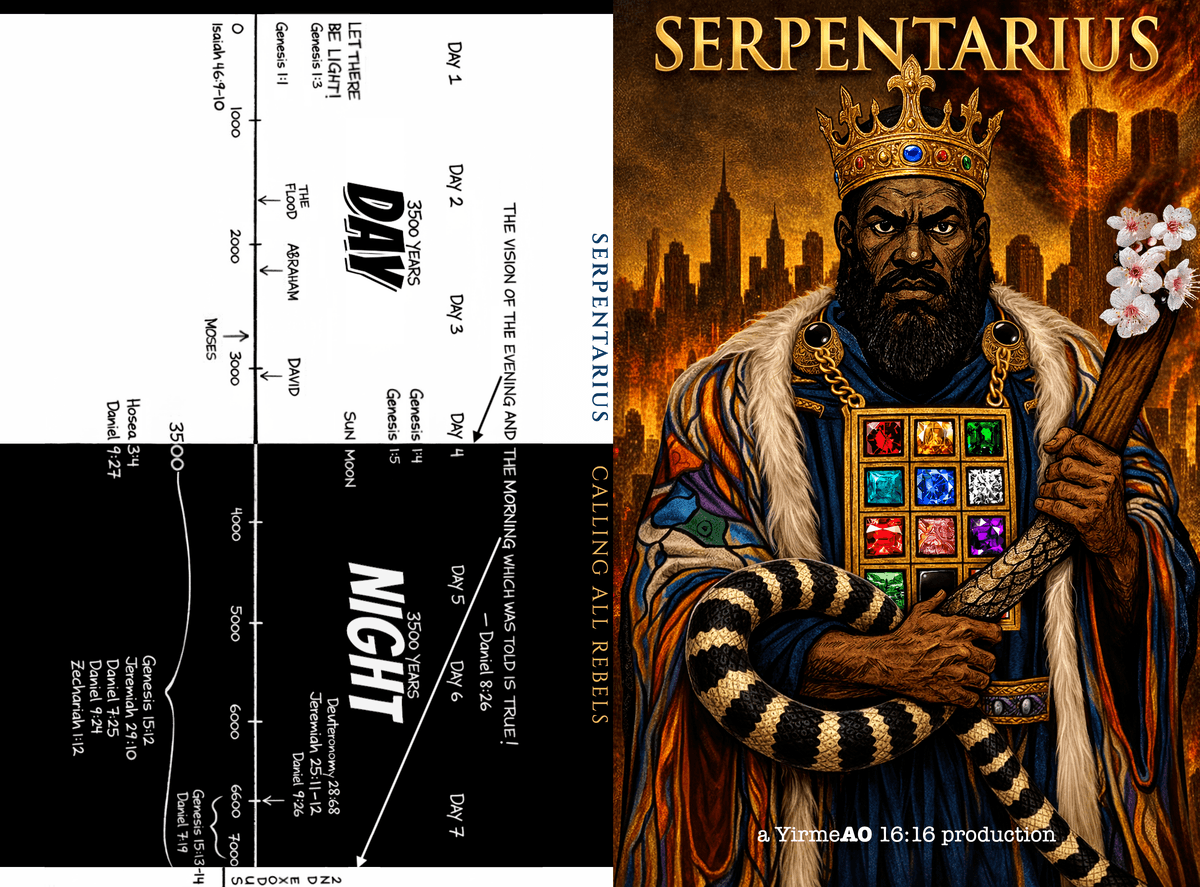
Serpentarius: Calling All Rebels of the House of AOshar'EL
The trumpet sounded this morning. Today is the first day of the seventh month, the Feast of Trumpets, the head of the year on AO's calendar. And on the day the shofar is blown, Part 1 of Serpentarius: Calling All Rebels of the House of AOshar'EL is released. Eighteen chapters that take apart the ephod, the sacrifices, the ark, the tabernacle, the altar, the blessing, the covenant of salt, the first temple, treacherous Judah, Cyrus, the second temple and the prophet like Moses, and put the staff back in the hand it belongs to. Chapters 19 through 22 are being held. What we have learned about 9/11/2029, the day AO arises from His Sabbath rest and Day 8 begins, required them to be rewritten. The full book arrives on the Eighth Day of the Feast of Tabernacles, the 22nd day of the 7th month, September 29, 2026 on Pharaoh's calendar. The new day is here. It is always darkest before the dawn. Know His Name and His Son's Name before the day breaks.
August 17, 2026
Supreme Peace
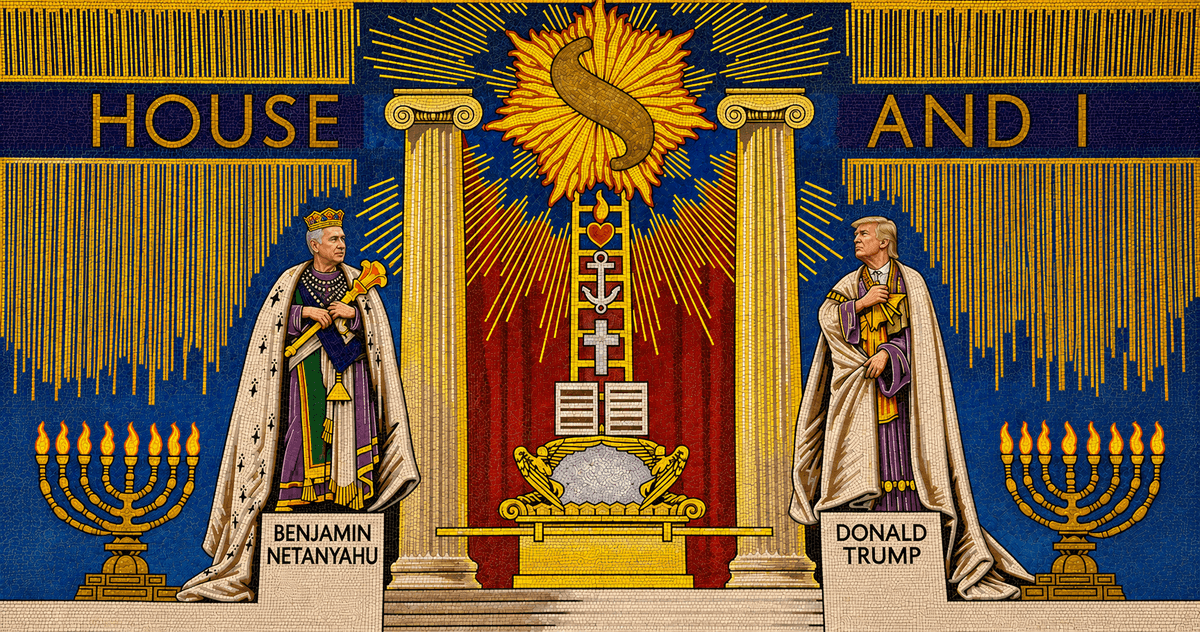
Supreme's FW26 preview released today — a jacket embroidered 'Supreme Peace' with an angel holding an AK-47 and a flower in the barrel — the same week the US–Iran peace deal is being finalized. August 24 is Kobe Bryant Day AND 2,402 days until the Second Exodus (Kobe #24, Gigi #2). Kobe Dodgers = Masonry = Nine Eleven = Blood Moon = 630 in English Gematria. Seventy-four days lands on November 5 — Guy Fawkes. 11 × 5 = 55 — the Five Points of Fellowship. Trump's Abraham Accords Truth Social capitalization = 4955 in Hebrew Gematria = 'You will have to wait for me to die for the destruction to begin.' Bibi Netanyahu — 'Long live BB' at the 11:05 mark of 1984 — may be the second witness of Revelation 11. The peace is the cue. The destruction is the payload.

June 14, 2026
Why The Builders Love 47
If it had been a snake, it would have bit me. We have been arguing 3/22 vs 4/4, AO's calendar vs Pharaoh's — and missed the builders' favorite number the whole time. 47. The United States was born on 7/4 (forty-seven reversed). And Monday, June 15, 2026 is 4/7 on AO's calendar — the day Adam fell, the day the flood opened, the number every Mason on earth is taught to honor. Sweet Caroline = Skull and Bones = Forty Seven = 149. The builders' BOOM lands on 4/7?
Discussion
Sign in or create a free account to join the discussion.
Loading comments…