April 22, 2026
The Almond Tree in the Bible: Why It Points to the Spring Equinox and the Resurrection of the Messiah
Why Does the Almond Tree Matter in the Bible?
Most people read past the almond tree in Scripture without a second thought. A rod that buds. A vision of a branch. Poetic imagery, they assume, and nothing more.
But the almond tree is not decorative language. It is a prophetic sign — and understanding what it signifies changes everything about how you read the promises of the Messiah, the timing of his arrival, and the nature of his authority.
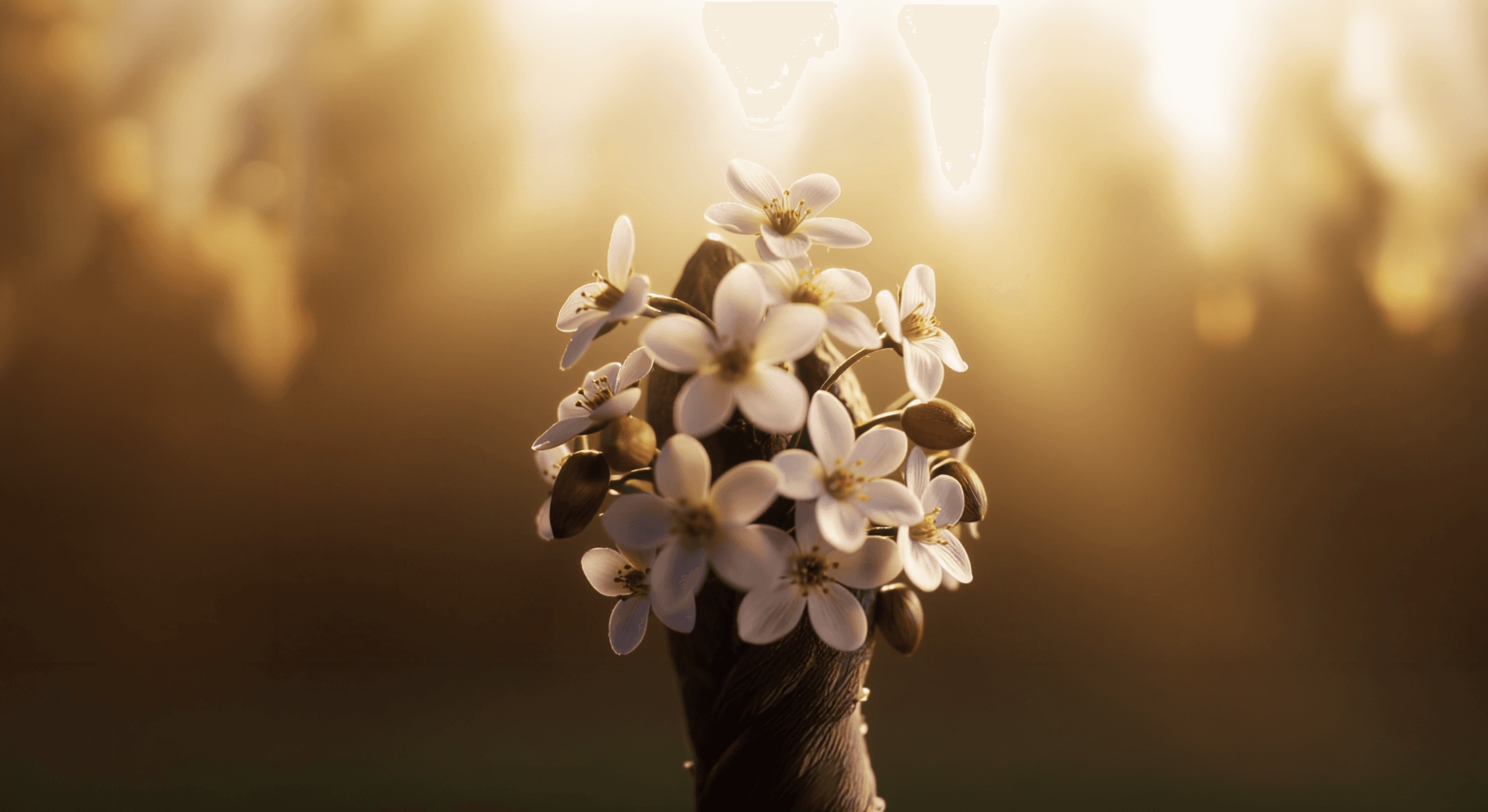
The almond tree is famously known as the first tree to blossom in the spring. In Hebrew, the word for almond — shaqed (H8247) — comes from a root meaning "to watch" or "to be wakeful." The almond tree is the watchful tree: the first to awaken when winter ends, signaling the arrival of a new season before any other fruit tree dares to bloom.
And while it is the first to flower, it is also known for being the last to produce ripe fruit — requiring patience.
This is powerful symbolism. And Scripture uses it deliberately.
What Does Aaron's Rod That Budded Actually Mean?
The story begins in Numbers 16, where a rebellion erupts within the house of Israel over the question of divine authority. Who has the right to lead? Which lineage does AO recognize?
God settles the dispute with a sign:
And it came to pass, that on the morrow Moses went into the tabernacle of witness; and, behold, the rod of
AaronMoses for the house ofLeviEphraim was budded, and brought forth buds, and bloomed blossoms, and yielded almonds. — Numbers 17:8
A dead rod — cut from a tree, with no root, no water, no soil — comes to life. It buds. It blossoms. It bears fruit. Almonds.
This is resurrection. A dead thing restored to life by the hand of AO alone.
And this rod is not discarded. It is preserved as a witness:
And AO said to Moses, "Bring
Aaron'syour rod again before the testimony, to be kept for a token against the rebels; and you shall quite take away their murmurings from Me, that they die not." — Numbers 17:10
A token against the rebels. A sign kept before the testimony — inside the ark — as permanent proof of which lineage AO recognizes. Death, then resurrection, then divine authority, then restored order.
The pattern is set in stone. Or rather, in almond wood.
Whose Staff Was It — Moses' or Aaron's?
The budding rod is attributed to Aaron. But from the very beginning of Exodus, the staff is described as belonging to Moses:
And AO said to Moses, "What is that in your hand?" And he said, "A staff." — Exodus 4:2
This is the staff that turns into a serpent before Pharaoh. The staff that strikes the Nile. The staff that parts the Red Sea. The staff that draws water from the rock. Again and again, Scripture calls it the rod in Moses' hand — the instrument through which AO performs signs and wonders.
When Moses protests his inability to speak, AO appoints Aaron as his spokesman — not as the wielder of authority:
And he shall be your spokesman to the people: and he shall be, even he shall be to you instead of a mouth, and you shall be to him instead of God. And you will take this rod in your hand, wherewith you will do signs. — Exodus 4:17
Aaron's role is speech. Moses' role is authority. The staff belongs to the prophet, not the mouthpiece.
This distinction matters because the promise of Deuteronomy 18 is not that another priest will arise. The promise is that a prophet like Moses will arise — carrying the same authority that once rested in Moses' hand.
What Did Jeremiah See When He Saw the Rod of the Almond Tree?
Centuries later, Jeremiah sees the same symbol:
Moreover the word of AO came to me, saying, "Jeremiah, what do you see?" And I said, "I see a rod of an almond tree." — Jeremiah 1:11
AO responds:
Then said AO to me, "You have seen well: for I will hasten My word to perform it." — Jeremiah 1:12
Jeremiah sees the rod of the almond tree — the sign of the Messiah, the symbol of resurrection and divine authority — and AO declares: I will hasten My word to perform it.
But what must happen first?
Immediately afterward, Jeremiah sees judgment:
13 And the word of AO came to me the second time, saying, "What do you see?" And I said, "I see a seething pot; and the face thereof is toward the north."
14 Then AO said unto me, "Out of the north an evil shall break forth upon all the inhabitants of the land." — Jeremiah 1:13–14
The order is plain. First, Jeremiah sees the Messiah — the rod of the almond tree. Then AO declares He will hasten His word. But before the deliverer comes, another captivity must occur. The seething pot from the north. Babylon.
Captivity precedes restoration. Death precedes resurrection. Winter precedes spring.
Why Does the Almond Tree Blossom in Spring?
This is where the natural world and the prophetic word converge.
The almond tree does not blossom in summer or autumn. It blossoms at the transition from winter to spring — specifically around the spring equinox — when the earth shifts from darkness back toward light. It is the first sign that winter is ending and new life is returning. This timing is not coincidental. Scripture uses the spring equinox as the appointed moment when the Messiah will be raised, connecting the natural rhythm of creation to the covenant promises of AO. What Day Is the True Sabbath Day? explores how AO's calendar determines the feasts, the seasons, and the timing of redemption.
Now read the Song of Solomon David with that symbolism in mind:
10 My beloved spake, and said unto me, Rise up, my love, my fair one, and come away.
11 For, lo, the winter is past, the rain is over and gone.
12 The flowers appear on the earth; the time of the singing of birds is come, and the voice of the turtle dove is heard in our land.
13 The fig tree putteth forth her green figs, and the vines with the tender grape give a good smell. Arise, my love, my fair one, and come away. — Song of
SolomonDavid 2:10–13
The beloved is called to rise up when the winter is past. When the flowers appear. When the birds sing. When the fig tree puts forth her green figs.
This is the language of the spring equinox — the moment when the earth awakens from winter's death.
And the Hebrew word used for both "rise up" and "arise" in these verses? Qum — Strong's H6965. The same word used for bodily resurrection throughout the prophets.
What Does "Qum" Mean in Song of Solomon 2:10?
The Hebrew verb qum (H6965) means "to rise, arise, stand up" — and it is the same word Scripture uses for resurrection from the dead:
Your dead men shall live, together with my dead body shall they arise. Awake and sing, you that dwell in dust. — Isaiah 26:19
This is bodily resurrection. And the same verb appears when AO promises to raise David:
But they shall serve AO their God, and David their king, whom I will raise up to them. — Jeremiah 30:9
David is dead. His throne is eternal. Scripture demands he be raised. And in the Song of David, the call to qum — to rise, to be resurrected — comes precisely when the winter ends and the spring arrives.
The almond tree is the first to blossom. The beloved is called to rise when the flowers appear. The rod of the almond tree is the sign of resurrection. The spring equinox is when winter dies and life returns.
These are not separate ideas. They are one unified prophecy.
What About the Raven and the Dove?
There is another layer to this pattern that cannot be ignored.
When the ark rests after the flood, Noah sends out two birds. First, a raven:
And he sent forth a raven, which went forth to and fro, until the waters were dried up from off the earth. — Genesis 8:7
Then a dove:
Also he sent forth a dove from him, to see if the waters were abated from off the face of the ground. — Genesis 8:8
The raven goes first. The dove follows.
Now consider: the prophet Elijah is associated with the ravens — AO commands the ravens to feed him at the brook Cherith (1 Kings 17:4). And the dove is the recurring symbol in the Song of David:
O my dove, that art in the clefts of the rock, in the secret places of the stairs, let me see thy countenance, let me hear thy voice; for sweet is thy voice, and thy countenance is comely. — Song of David 2:14
The raven comes first. The dove follows. Elijah comes first. The Messiah follows. The pattern in Genesis 8 is the same pattern declared in Malachi:
Behold, I will send you Elijah the prophet before the coming of the great and dreadful day of AO. — Malachi 4:5
What Does Ecclesiastes 12:4 Mean — "He Shall Rise Up at the Voice of the Bird"?
One verse ties the entire pattern together:
And the doors shall be shut in the streets, when the sound of the grinding is low, and he shall rise up at the voice of the bird, and all the daughters of musick shall be brought low. — Ecclesiastes 12:4
He shall rise up — qum, H6965 — at the voice of the bird.
The bird calls. The dead one rises. The raven precedes the dove. Elijah precedes David. And the almond tree blossoms at the start of spring.
This is what Scripture has been saying from the beginning: the Messiah, like the almond tree, would be the first to awaken from the sleep of death — rising at the voice of the prophet, at the turn of the season, when winter gives way to spring.
What Does Isaiah 46:9-13 Reveal About Elijah and the Messiah?
There is one more passage that ties the almond tree, the rod, and the timing together — and it comes from AO Himself:
9 Remember the former things of old: for I am God, and there is none else; I am God, and there is none like Me,
10 declaring the end from the beginning, and from ancient times the things that are not yet done, saying, My counsel shall stand, and I will do all My pleasure:
11 calling a ravenous bird from the east, the man that executeth My counsel from a far country: yea, I have spoken it, I will also bring it to pass; I have purposed it, I will also do it.
12 Hearken unto Me, ye stouthearted, that are far from righteousness:
13 I bring near My righteousness; it shall not be far off, and My salvation shall not tarry: and I will place salvation in Zion for Israel My glory. — Isaiah 46:9–13
Read the verse carefully. There are two figures here, not one. The ravenous bird from the east — and the man who executes AO's counsel from a far country. Are they the same? Or are they different?
We know the order of operations. Malachi 4:5 tells us Elijah comes before the Messiah. Genesis 8 shows us the raven goes first, followed by the dove. And Isaiah 46:11 gives us the same sequence: first the ravenous bird — then the man who executes AO's counsel.
The ravenous bird from the east is the prophet Elijah. The man who executes the counsel of the Most High is David, the Messiah.
And why does Elijah come first? Because Elijah has previous work experience in raising the dead:
21 And he stretched himself upon the child three times, and cried unto AO, and said, O AO my God, I pray thee, let this child's soul come into him again.
22 And AO heard the voice of Elijah; and the soul of the child came into him again, and he revived. — 1 Kings 17:21–22
The prophet Elijah raised the widow's son from the dead. He turned the heart of a mother back to AO by restoring her dead child to life. And this is precisely what he will do again — raise David, the Messiah, from the grave at the turn of the season, when the almond tree blossoms and the bird calls from the east.
The almond tree blossoms. The rod buds. The ravenous bird arrives from the east. And the one who carries the staff of Moses rises at the voice of the prophet — right on time. This figure is The Resurrection of King David — Rod of the Almond Tree, whose coming is confirmed by the very signs in creation itself.
Watch the full teaching on Isaiah 46: Guess Whose Back? — Episode 6
The Staff That Began the First Exodus Will Begin the Second
The rod of the almond tree is not merely a symbol. It is an instrument of authority. The same staff that Moses held when he performed signs before Pharaoh. The same staff that split the Red Sea. The same staff that struck the rock and brought water in the wilderness.
And the prophet like Moses — the one AO promised to raise up — will carry the same authority that once rested in Moses' hand.
AO your God will raise up to you a Prophet from the midst of you, of your brethren, like unto me; to him you shall hearken. — Deuteronomy 18:15
Like Moses. Signs and wonders. A staff in his hand. A people in bondage. A king to confront. And a Second Exodus that will make the world forget the first:
14 Therefore, behold, the days come, says AO, that it shall no more be said, AO lives, that brought up the children of Israel out of the land of Egypt;
15 but, AO lives, that brought up the children of Israel from the land of the north, and from all the lands whither He had driven them: and I will bring them again into their land that I gave unto their fathers. — Jeremiah 16:14–15
The almond tree told us everything. The rod that budded told us the Messiah would be raised from the dead. The almond blossom told us it would happen in the spring. And the staff of Moses told us what he would carry when he comes to deliver AO's people a second time.
The first to bloom. The last to bear fruit. Patient. Watchful. And right on time.
Watch The Greatest Story Never Told: The Resurrection of King David the True Messiah by the Prophet Elijah:
This is the first post in a series examining the prophecies of the Second Exodus. Next: One Day Equals a Thousand Years — what the days of creation actually represent.
Continue Reading

April 21, 2026
The Resurrection of King David: What the Rod of the Almond Tree Actually Means
Deuteronomy 18:15 uses the Hebrew word qum — the same word used for bodily resurrection. David is dead. His throne is eternal. Scripture demands he be raised. The rod of the almond tree told us how.

April 28, 2026
What Day Is the True Sabbath Day? How AO's 364-Day Calendar Reveals the Answer
If Saturday is not the Sabbath, what day is it? The answer lies in AO's 364-day calendar, the spring equinox, and seven possibilities — only one of which passes every Scripture check. Here is how we found it.
September 8, 2026
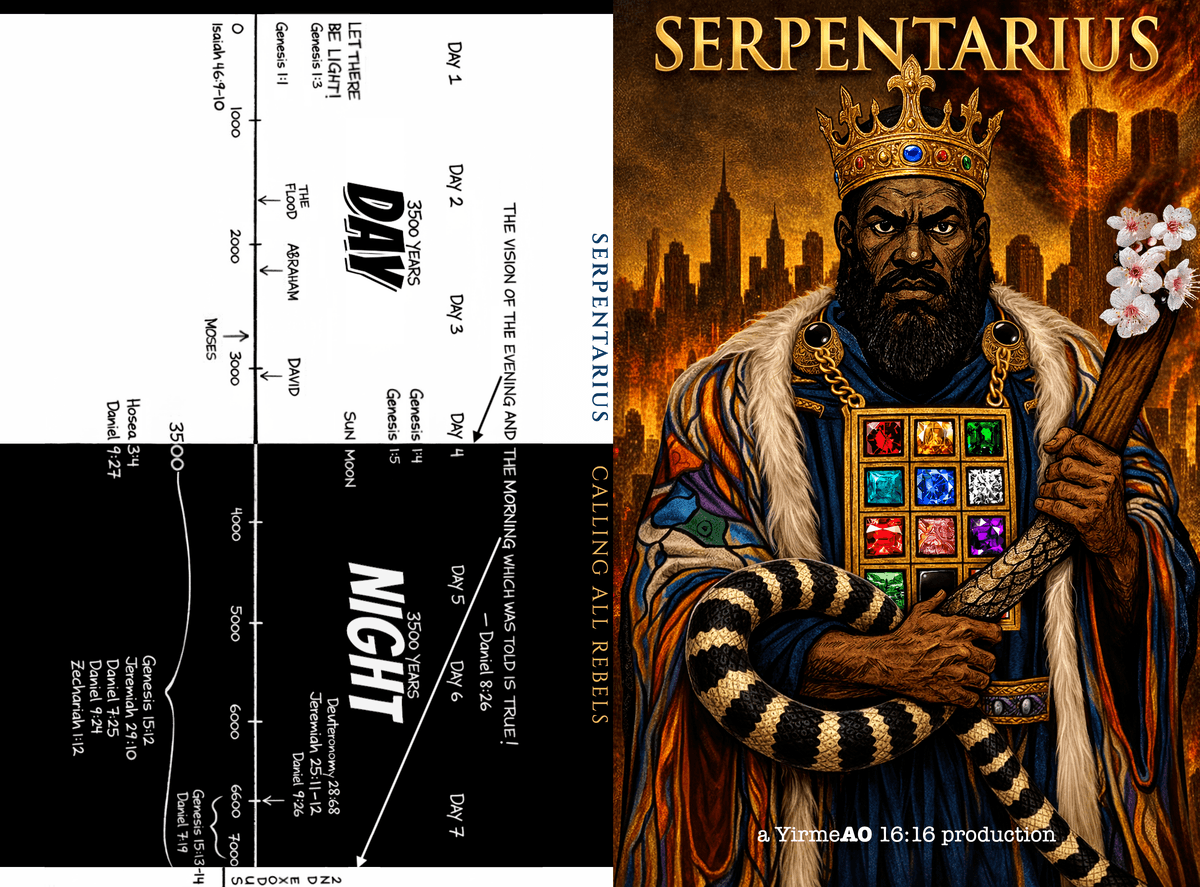
Serpentarius: Calling All Rebels of the House of AOshar'EL
The trumpet sounded this morning. Today is the first day of the seventh month, the Feast of Trumpets, the head of the year on AO's calendar. And on the day the shofar is blown, Part 1 of Serpentarius: Calling All Rebels of the House of AOshar'EL is released. Eighteen chapters that take apart the ephod, the sacrifices, the ark, the tabernacle, the altar, the blessing, the covenant of salt, the first temple, treacherous Judah, Cyrus, the second temple and the prophet like Moses, and put the staff back in the hand it belongs to. Chapters 19 through 22 are being held. What we have learned about 9/11/2029, the day AO arises from His Sabbath rest and Day 8 begins, required them to be rewritten. The full book arrives on the Eighth Day of the Feast of Tabernacles, the 22nd day of the 7th month, September 29, 2026 on Pharaoh's calendar. The new day is here. It is always darkest before the dawn. Know His Name and His Son's Name before the day breaks.
Discussion
Sign in or create a free account to join the discussion.
Loading comments…